
The exact frequency can depend on applicable state requirements, facility policy and the type/intensity of use, so avoid presenting “annual” as a universal TJC-mandated interval. Your current article itself says TJC does not prescribe one exact calendar interval.
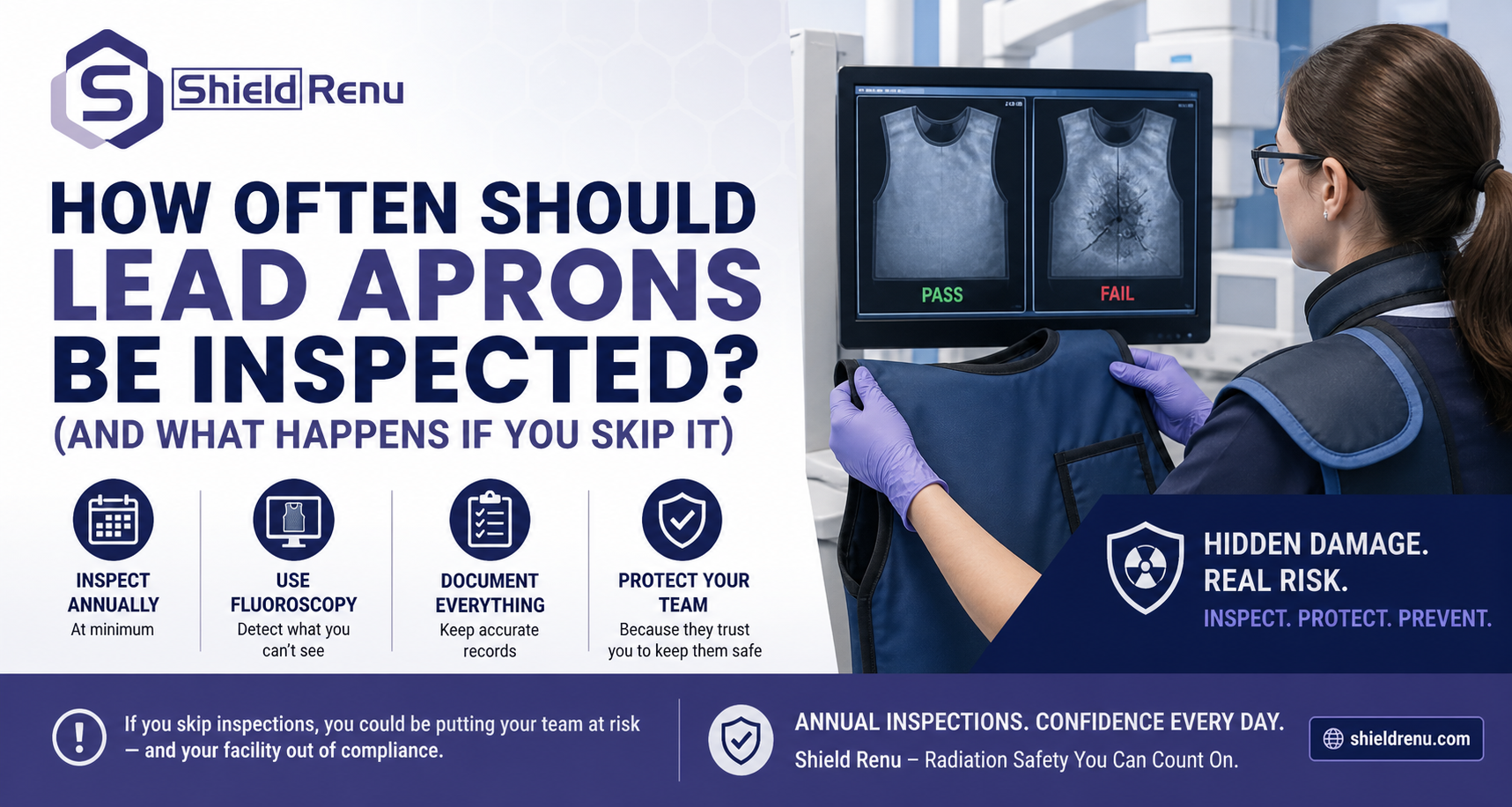
Lead aprons should be inspected regularly as part of a facility’s radiation safety program, with a thorough integrity inspection typically performed at least annually. High-use environments such as interventional radiology and cardiac catheterization labs may require more frequent inspections based on facility policy, usage, and applicable requirements.
Visual and tactile checks can help identify obvious damage, but imaging-based inspection may be needed to detect internal cracks, holes, or other defects that are not visible on the surface. Inspection results should be documented and damaged protective garments removed from use until their condition is resolved.
This guide breaks down exactly how often lead aprons should be inspected, what those inspections must include, what the regulatory standards say, and what happens to your staff, your patients, and your facility if you skip this critical step.
Why Lead Apron Inspection Matters More Than Most People Realize
Lead aprons are not indestructible. They are made from lead-vinyl composite or lead-free attenuating materials that degrade over time. Repeated folding, improper storage, regular use, and even just gravity takes a toll. The internal shielding material can crack, separate, or thin out in ways that are completely invisible to the naked eye.
Here’s what makes this particularly dangerous: a damaged lead apron looks fine from the outside. The outer fabric cover can be perfectly intact while the shielding inside has significant holes or gaps. Without proper radiation shielding inspection, there is simply no way to know whether your apron is actually protecting your staff.
X-ray fluoroscopy reveals the truth. And when facilities actually conduct regular fluoroscopic inspections, they are often alarmed by what they find -cracked lead near the collar, thinned areas at the shoulder and waist, gaps at folds and seams. These are not rare edge cases. In facilities that have not maintained regular inspection programs, compromised garments are common.
The stakes are real. Radiation exposure is cumulative. Small doses add up over a career. A technician or radiologist who works daily under the assumption that their apron is intact -when it isn’t -faces unnecessary long-term exposure with no way to course-correct.
How Often Should Lead Aprons Be Inspected? The Standard Answer
Quick Answer
How often should lead aprons be inspected?
- At least annually: Conduct a documented integrity inspection as part of the facility’s radiation safety program.
- High-use environments: Consider more frequent inspections based on usage and facility policy.
- Visual checks: Look for tears, cracks, wear and other visible damage regularly.
- Suspected damage: Remove the apron from service until it has been properly evaluated.
- Documentation: Keep inspection dates, findings and actions recorded.
Here is how the key standards break down:
The Joint Commission (TJC)
The Joint Commission does not prescribe a specific inspection interval in exact calendar terms, but its standards require that radiation protection equipment be maintained in proper working condition and that facilities have documented programs for managing that equipment. During TJC surveys, inspectors look for evidence that aprons have been evaluated, documented, and either cleared for continued use or removed from service.
Facilities that cannot produce inspection records are cited. Facilities that have aprons in service with documented deficiencies -and no corrective action -face more serious findings. TJC lead apron compliance is not just a paperwork issue; it directly touches patient and staff safety standards.
The National Council on Radiation Protection and Measurements (NCRP)
NCRP Report No. 105 recommends regular inspection of protective apparel, with fluoroscopic examination as the gold standard for identifying internal defects. Visual inspection alone is explicitly insufficient.
ACR, AAPM, and State Radiation Control Programs
The American College of Radiology, the American Association of Physicists in Medicine, and most state radiation control programs echo the same principle: lead aprons should be fluoroscopically inspected on a regular, documented schedule -typically annually at minimum.
Some states have codified this into regulation. Others treat it as a best practice under broader radiation safety program requirements. Either way, the direction is consistent.
What Does a Lead Apron Inspection Include?
Not all inspections are equal. A true radiation protection garment testing protocol involves more than a quick visual once-over. Here is what a comprehensive inspection should cover:
- Visual Inspection Check for tears, discoloration, surface cracks, and worn areas in the outer cover. While visual inspection alone cannot identify internal defects, it is still a necessary first step. Visible damage often signals deeper issues underneath.
- Tactile Inspection Run your hands across the entire surface of the apron, feeling for unusual rigidity, lumps, separation, or soft spots. Stiff areas often indicate cracked shielding material. This step is quick but valuable.
- Fluoroscopic Examination This is the only method that can reliably detect internal defects in the shielding material. The apron is placed under a fluoroscope and examined for gaps, cracks, holes, or areas of reduced density.
- Documentation and Tagging Each apron that passes inspection should be tagged with a lead apron inspection tag that shows the inspection date, the result, and the next due date. This documentation is what surveyors look for. It is also what protects your facility in the event of an audit or incident review.
- Assessment for Retirement Aprons do not last forever. Part of every inspection is an honest assessment of whether a garment has reached the end of its usable life. Age, usage frequency, and condition all factor into this decision.
High-Use Environments: When Annual Is Not Enough
Annual inspection is a baseline. For certain environments, it is not sufficient on its own.
Interventional radiology suites, catheterization labs, and busy fluoroscopy rooms put enormous wear on protective garments. Aprons in these settings may see daily use from multiple users, be stored improperly in between procedures, and accumulate damage far faster than in lower-volume settings.
In high-use environments, many radiation safety officers recommend:
- Semi-annual fluoroscopic inspections
- Monthly visual and tactile checks performed in-house
- Immediate inspection any time an apron is dropped, stepped on, or improperly stored
- Post-incident review when an apron is known to have been mishandled
The cost of more frequent inspection is trivial compared to the cost of operating with compromised equipment -both in terms of regulatory exposure and actual radiation exposure to staff.
What Happens When Facilities Skip Lead Apron Inspection
Let’s be direct about the consequences, because they span three distinct risk areas.
Staff Health Risks
Radiation exposure is cumulative. A staff member who works with a compromised apron for months or years receives unnecessary dose that accumulates over their career. The biological effects -particularly increased cancer risk -may not manifest for decades, which is exactly why ongoing protection matters so much. Radiation shielding services exist precisely to catch these failures before they result in harm.
Patient Safety and Liability
When staff are inadequately protected, they may reduce their time in the room, avoid certain positioning, or take shortcuts that affect patient care. There is also the institutional liability dimension: if a staff member develops a radiation-related illness and an inspection program was never maintained, the facility’s exposure is significant.
Regulatory and Accreditation Consequences
This is where the rubber meets the road for many administrators. A failed TJC survey finding related to radiation protection can trigger:
- Required corrective action plans
- Follow-up surveys
- Conditional accreditation status
- In serious or repeated cases, impacts on Medicare and Medicaid billing eligibility
State radiation control programs can also issue notices of violation, require remediation, and in repeated cases, escalate to licensing actions.
The documentation gap is often what gets facilities in trouble. Even if your aprons are in reasonable condition, not being able to prove it is a compliance failure.
Building a Lead Apron Inspection Program That Actually Works
A functional inspection program does not have to be complicated. The core elements are:
Inventory your garments. Know exactly how many aprons you have, where they are, and when each was last inspected. Assign each garment a unique identifier.
Set a schedule and stick to it. Annual fluoroscopic inspection is the minimum. Put it on the calendar 60 days in advance so scheduling does not become the reason it gets pushed back.
Use inspection tags. Lead apron inspection tags make compliance visible and auditable at a glance. Surveyors notice them. More importantly, staff notice them too -it signals that the program is real and active.
Maintain documentation. Keep records of each inspection: date, inspector, method, findings, and outcome. A simple spreadsheet works. A dedicated log works even better.
Address findings promptly. An apron that fails inspection must be removed from service immediately. Do not tag it, set it aside for later review, and hope it gets retired. Remove it. Document the removal. Replace it.
Include cleaning in your program. Contaminated or improperly cleaned aprons degrade faster. Regular lead apron cleaning services extend garment life and support hygiene standards. Cleaning and inspection are complementary, not competing priorities.
Protect Your Team with Certified Lead Apron Inspections Today!
Lead apron inspection frequency should not be determined by when your next accreditation survey is scheduled. It should be driven by what your staff deserves: the confidence that the protection they are relying on every single day is actually working.
The standard is clear. Inspect annually at minimum. Use fluoroscopy. Document everything. Tag your garments. Remove failures from service immediately.
If your facility does not have a current, documented inspection program in place, that is the most important thing to fix today -not because a surveyor might ask about it, but because your team walks into the radiation suite trusting that you have.
FAQs
Q1: How often should lead aprons be inspected?
At minimum, once a year using fluoroscopic testing. High-use environments like interventional radiology or cath labs should inspect every 6 months.
Q2: Can I visually inspect a lead apron myself?
Visual checks help catch surface damage, but they can’t detect internal cracks or gaps in the shielding. Only fluoroscopic examination can confirm an apron is truly intact.
Q3: What happens if a lead apron fails inspection?
It must be removed from service immediately. Do not continue using a compromised apron while waiting on a replacement -document the removal and retire the garment.
Q4: Does The Joint Commission require lead apron inspections?
TJC doesn’t name a specific interval, but it requires radiation protection equipment to be maintained and documented. Facilities without inspection records are cited during surveys.
Q5: How long do lead aprons last?
Most aprons last 5–10 years with proper care. Regular inspection, correct storage (hung flat or on a rack -never folded), and professional cleaning all extend garment life significantly.

One Response