
If your radiology department is still tracking lead aprons on spreadsheets, you’re not alone – but you are falling behind. Across hospitals and imaging centers nationwide, lead apron inventory management has long been treated as a low-priority administrative task. The reality, however, is far more serious. Missing aprons, failed inspections, regulatory penalties, and compromised staff safety are all downstream consequences of poor inventory practices.
This guide explores why spreadsheets are failing healthcare facilities, what best-in-class radiation protection equipment management looks like, and how a digital lead apron tracking system can transform your compliance posture – often in a single day.
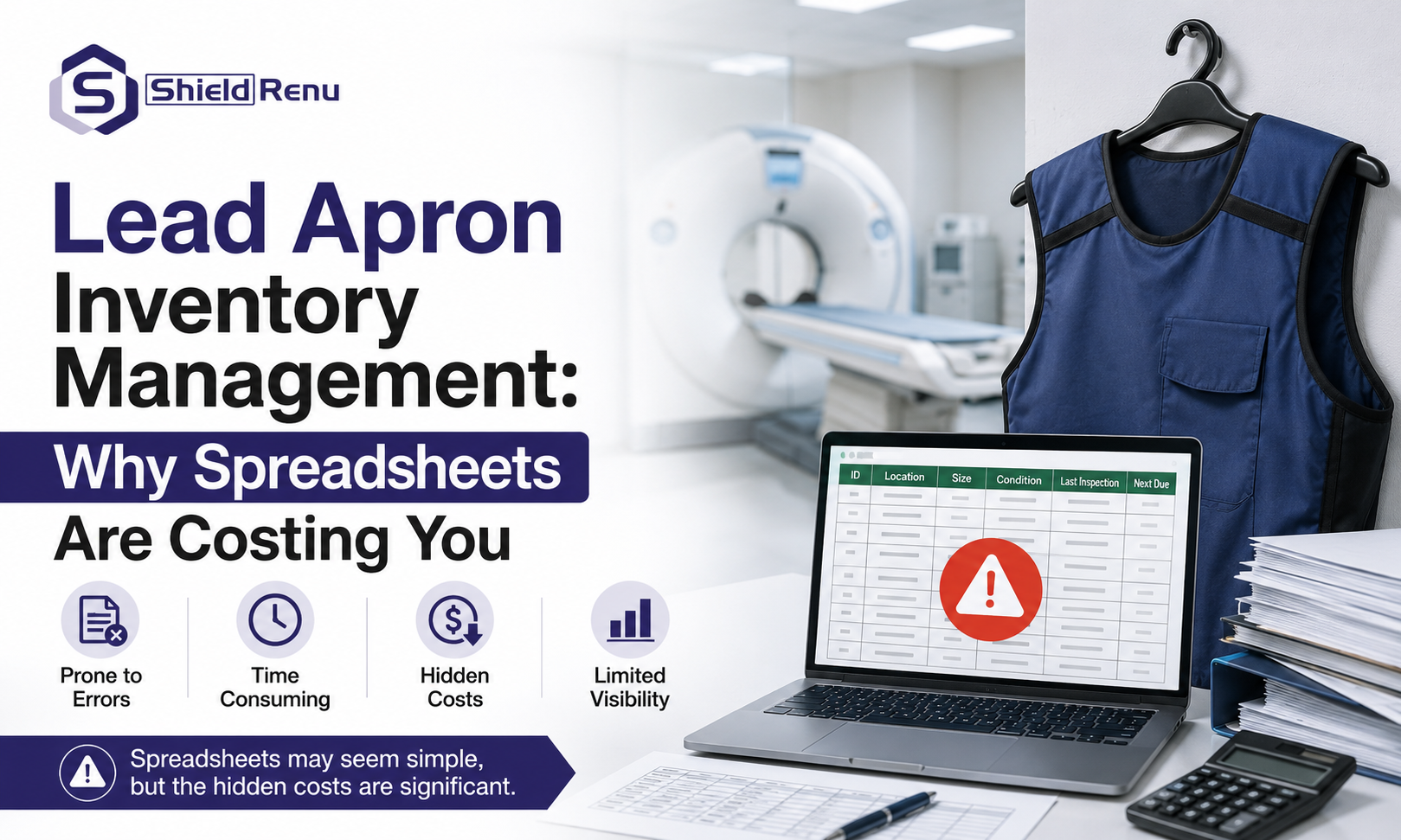
The Hidden Cost of Managing Lead Aprons Manually
Most radiology managers didn’t choose spreadsheets because they were the best tool. They inherited them. Over time, these files grow unwieldy – columns added by different staff, dates entered inconsistently, and entire garments simply lost from the record because someone didn’t update the sheet after a department transfer.
Here’s what that actually costs your facility:
- Lost aprons you keep paying to replace – at $400–$800 each
- Missed inspection deadlines that put you out of compliance with Joint Commission and state regulations
- Staff time wasted hunting down aprons, updating logs, and preparing for audits
- Liability exposure when a defective apron isn’t caught because records weren’t current
- No single source of truth across departments, floors, or locations
According to facility managers who have switched to digital lead apron tagging and inventory systems, the transition typically surfaces 10–20% more garments than were tracked in their spreadsheets – aprons that were sitting unchecked in procedure rooms, storage closets, or left over from staff who had long since departed.
What Is Lead Apron Inventory Management?
Lead apron inventory management is the systematic process of tracking, documenting, and maintaining every radiation protection garment in a healthcare facility. This includes:
- Recording garment type, department assignment, and condition
- Scheduling and logging annual integrity inspections
- Tracking garment history – cleaning, repairs, and inspection results
- Flagging failed or disposed garments and removing them from active inventory
- Generating compliance-ready reports for audits and regulatory reviews
When done properly, lead apron asset management gives facilities full visibility into what they own, where it is, and whether it’s safe to use. When done poorly – or not at all – facilities operate blind, with real consequences for staff safety and regulatory standing.
Did You Know?
“Regulators including The Joint Commission expect facilities to maintain documented records of radiation protection equipment inspections. Incomplete records – even if the aprons themselves are fine – can trigger citations during surveys.”
Why Spreadsheets Are Costing You More Than You Think
Spreadsheets seem free, but they carry hidden costs that show up in audits, replacement orders, and staff frustration. Here’s a breakdown of where they fall short:
1. No Real-Time Visibility
A spreadsheet is a snapshot – accurate only at the moment it was last updated. When aprons move between departments, the sheet rarely follows. You end up with one department’s records showing aprons that are actually in another wing, or worse, aprons that have left the building entirely.
2. No Automated Inspection Reminders
Annual lead apron integrity inspections are a regulatory requirement, not a best practice. Spreadsheets don’t send alerts. If an inspection window comes and goes unnoticed, you may not discover the lapse until a surveyor points it out.
3. Error-Prone Data Entry
Every manual entry is a potential error. A garment ID mistyped, an inspection date left blank, or a “disposed” apron that never got removed from active inventory – these small mistakes compound into unreliable records.
4. Audit Scrambles
When a surveyor walks in, you have hours – sometimes minutes – to produce compliance documentation. Facilities relying on spreadsheets report spending days or weeks in preparation. Digital systems generate reports on demand.
5. No Lifecycle Tracking
Lead apron lifecycle management means understanding not just where a garment is today, but its full history: how old it is, how many inspections it has passed, whether it has been repaired, and when it should be retired. Spreadsheets offer no structured way to capture or query this data.
Spreadsheets vs. Digital Inventory: At a Glance
The difference between manual tracking and a purpose-built lead apron inventory management system is not incremental – it’s transformational:
| Feature | Spreadsheets | Digital Inventory System |
|---|---|---|
| Real-time visibility | None | Full, across all departments |
| Audit readiness | Manual scramble | Instant compliance reports |
| Barcode/RFID tracking | Not supported | Built-in scanning |
| Inspection scheduling | Easy to miss | Automated reminders |
| Lost apron tracking | Guesswork | Location history per garment |
| Lifecycle management | Manual entry errors | Automated lifecycle records |
How Digital Lead Apron Tracking Works
Modern radiology apron tracking software combines barcode tagging, mobile scanning, and cloud-based record keeping to give facilities complete, real-time oversight of their radiation protection inventory.
Here is how a professional lead apron barcode tracking system works in practice:
- Each garment receives a unique, durable barcode tag affixed during an on-site visit
- The tag is scanned and linked to a digital garment profile – including department, type, and condition
- All subsequent inspections, cleaning records, and status changes are logged against that profile
- Staff can locate any garment’s full history instantly by scanning the barcode or searching the app
- Compliance reports are generated automatically, ready for auditors at any time
Shield Renu’s tagging and inventory service delivers exactly this – on-site tagging of every garment, same-day completion, and free access to the Shield Renu inventory app for all clients. No imaging rooms are used or disrupted.
Lead Apron Inspections: The Compliance Foundation
Inventory tracking is only as valuable as the inspection data behind it. A lead apron inventory database that doesn’t include current inspection records is incomplete – and potentially misleading.
Shield Renu’s radiological lead apron inspection service uses full radiographic (X-ray) scanning of each garment to detect:
- Holes and cracks in the lead lining
- Thinning areas that no longer provide adequate protection
- Hidden defects not visible to the naked eye
- Damage from improper storage or folding
Results are compiled into a detailed digital report – with pass/fail status and defect photos – available in the Shield Renu app the same day. This means your compliance records are never more than a scan away.
The Role of Lead Apron Cleaning in a Complete Program
Inventory and inspection records tell you where your aprons are and whether they’re structurally sound. But a complete radiation safety program also needs to address how clean they are.
A Wayne State University study found that 84% of lead aprons tested positive for contamination, and 12% showed signs of MRSA colonization. Surface wipes – the standard in most facilities – are clinically proven insufficient because they skip the cleaning step that CDC guidelines require before disinfection.
Shield Renu’s professional lead apron cleaning service follows the full two-step process – hospital-grade cleaning solution applied across the full surface, followed by a thorough wipe-down – and logs each cleaning event in the garment’s digital profile. Every cleaning is documented, trackable, and audit-ready.
How to Improve Lead Apron Compliance at Your Facility
Transitioning from spreadsheets to a digital lead apron compliance management system doesn’t require a months-long IT project. Here are the practical steps:
- Conduct a full physical inventory – locate every garment in the facility
- Tag each garment with a unique barcode and create digital profiles
- Schedule and complete radiographic integrity inspections for all garments
- Remove failed garments from circulation and document disposal
- Establish a recurring inspection and cleaning schedule – annually at minimum
- Ensure all records live in a centralized system accessible by compliance and radiology leadership
Shield Renu handles steps 1 through 4 in a single on-site visit – with same-day digital reporting and immediate access to your inventory dashboard. Learn more about the full service offering at shieldrenu.com/services.
Who Benefits Most from a Lead Apron Inventory Management System?
Digital radiation safety equipment tracking is not just for large academic medical centers. Any facility that uses radiation protection garments will benefit – including:
- Hospital radiology and imaging departments
- Interventional cardiology and electrophysiology labs
- Orthopedic and general surgery suites with fluoroscopy
- Outpatient imaging and diagnostic centers
Frequently Asked Questions
Q: What is lead apron inventory management, and why does it matter?
A: Lead apron inventory management is the process of systematically tracking, documenting, and maintaining every radiation protection garment in a facility. It matters because regulatory bodies like The Joint Commission expect documented compliance records, defective aprons create patient and staff safety risks, and missing inventory represents significant replacement cost. Without a formal system, facilities are frequently out of compliance without knowing it.
Q: How often should lead aprons be inspected?
A: Annual fluoroscopic (X-ray) integrity inspections are the gold standard and are required by most regulatory frameworks. Visual-only inspections are insufficient because they miss internal defects – cracks, thinning, and holes that are invisible on the surface but leave wearers unprotected. Inspections should be logged in a centralized system with pass/fail documentation for each garment.
Q: Can a digital system help reduce lost lead aprons?
A: Yes – significantly. Barcode-based lead apron tracking systems assign each garment a unique identifier and department profile. When an apron goes missing, staff can query the system to see the last logged location and status. Facilities that have implemented barcode tracking typically recover 10–20% more garments than were listed in their prior spreadsheet records, simply because they now know what to look for.
Q: What is the difference between a lead apron inspection and a lead apron audit?
A: An inspection is the physical testing of individual garments for structural integrity – typically done with fluoroscopic X-ray imaging. An audit is a compliance review of your records – verifying that inspections were completed on schedule, failed garments were removed, and documentation is complete. Both are important. A digital inventory system like the Shield Renu app keeps inspection records audit-ready at all times, so you are prepared for either.
Q: How does Shield Renu’s tagging and inventory service work?
A: Shield Renu arrives at your facility in a fully equipped mobile trailer. Each garment is tagged with a unique, durable barcode and linked to a digital profile in the Shield Renu app. The profile captures department assignment, garment type, inspection history, cleaning history, and condition status. The entire process is completed on-site, same day, without using or disrupting imaging rooms. Access to the inventory app is included free for all service clients.
Q: Is the Shield Renu inventory app available for all devices?
A: Yes. The Shield Renu inventory app is accessible from any device and provides a real-time dashboard showing all garments, their last inspection date, department assignment, and compliance status. Managers can search individual garment histories instantly by scanning a barcode or using the app’s search function – eliminating the need for spreadsheet lookups or paper logs.

2 Responses