
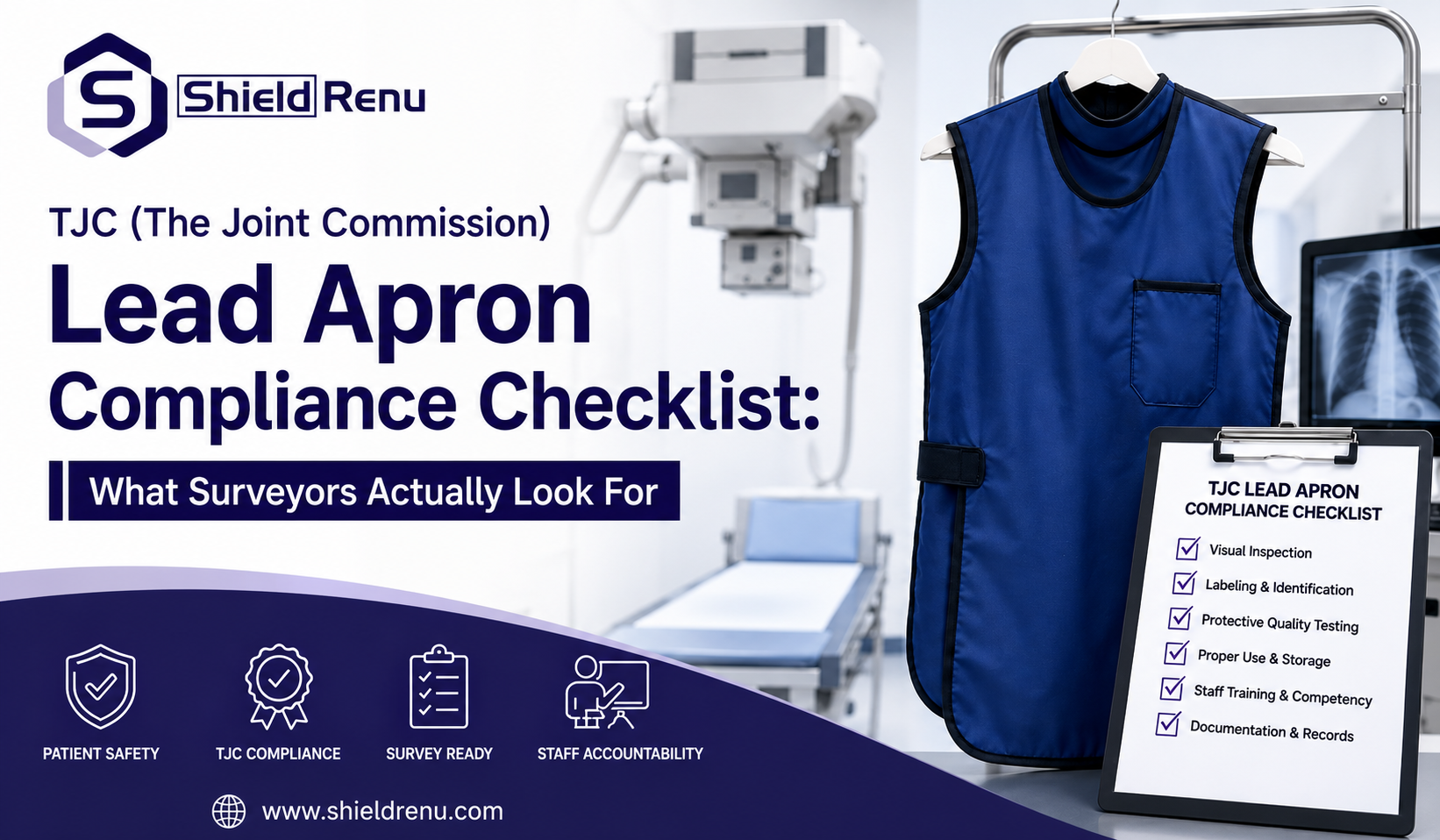
A Joint Commission (TJC) survey can feel unpredictable – until it isn’t. Ask any radiology manager who has been through one, and they’ll tell you the same thing: lead apron compliance is one of the most commonly cited findings during accreditation surveys. It’s not because hospitals don’t care about radiation safety. It’s because lead apron inspection and documentation often falls through the cracks between radiology, biomed, and safety departments.
This guide breaks down exactly what TJC surveyors look for when they review your lead aprons and radiation protection program, so you can walk into your next survey – announced or unannounced – fully prepared.
Why TJC Cares About Lead Apron Compliance
The Joint Commission’s Environment of Care (EC) and Radiation Safety standards require hospitals to maintain a documented, ongoing inspection program for all protective radiation equipment, including lead aprons, thyroid shields, and gonadal shields. This isn’t a one-time checkbox – it’s a continuous radiation safety compliance requirement tied to patient and staff protection.
Surveyors treat lead apron gaps as a proxy for how seriously a facility takes its broader radiation protection program. A single cracked apron with no inspection record can trigger deeper scrutiny into your entire PPE management process.
What TJC Surveyors Actually Check
When a surveyor walks into your radiology, cath lab, or OR suite, here’s the TJC lead apron compliance checklist they’re mentally running through:
1. Visual and Physical Inspection Records
Surveyors ask: When was this apron last inspected, and where’s the record? Every apron should have a documented inspection date, method used (visual, fluoroscopic, or radiographic), and the name of the person who performed it.
2. Apron Integrity and Cracking
Surveyors may physically flex aprons to check for cracks in the lead lining – a key lead apron cracking and defects concern, since micro-fractures reduce shielding effectiveness even when the apron looks fine externally.
3. Frequency of Inspection
Most accredited facilities follow an annual inspection minimum, though many now inspect semi-annually due to daily wear and tear. Surveyors will ask for your facility’s written policy and confirm it’s being followed consistently – not just documented on paper.
4. Apron Labeling and Traceability
Each apron should have a unique identifier (tag, barcode, or serial number) linking it to its inspection history. Unlabeled or untraceable aprons are a frequent citation point, since surveyors can’t verify age, usage, or inspection status.
5. Storage Conditions
Improperly stored aprons – folded instead of hung, left in high-heat areas, or stacked – degrade faster and are more prone to internal cracking. Surveyors often check storage racks as part of their radiology department compliance walkthrough.
6. Removal of Failed Aprons from Circulation
If an apron fails inspection, TJC expects proof that it was immediately removed from clinical use – not just flagged for “later.” A missing removal log is one of the most common PPE audit trail failures cited during surveys.
7. Staff Awareness
Surveyors sometimes ask staff directly: How do you know this apron is safe to use? If your team can’t answer confidently, it signals a training gap, not just a documentation gap.
How to Prepare for a TJC Survey on Lead Apron Compliance
If you’re doing TJC survey preparation for your radiology or imaging department, focus on these steps:
- Centralize your records. Spreadsheets scattered across departments are a red flag. Move toward a single digital inspection log.
- Tag every apron. Barcode or QR-code tagging makes traceability instant during a walkthrough.
- Schedule inspections proactively. Don’t wait for survey season – build inspection cycles into your annual radiation safety calendar.
- Document the “why,” not just the “what.” Note why an apron passed or failed, not just a pass/fail checkbox.
- Train staff on basic visual checks. Frontline awareness reduces the risk of a surveyor catching your team off guard.
The Cost of Getting This Wrong
A failed lead apron compliance finding doesn’t just mean a citation – it can delay full accreditation, trigger a follow-up survey, and damage your facility’s standing with CMS-linked reimbursement requirements. For most hospitals, the fix isn’t complicated; it’s about having a reliable, repeatable inspection and documentation process rather than scrambling before survey week.
This is exactly where a structured, third-party inspection partner can help – providing standardized testing, digital records, and audit-ready reports that hold up under TJC scrutiny.
Staying Survey-Ready, Every Day – Not Just Survey Week
TJC lead apron compliance isn’t about perfection – it’s about traceability, consistency, and documentation you can produce on demand. Facilities that treat inspection as an ongoing process, rather than a pre-survey scramble, consistently avoid citations in this area.
If your department is due for an inspection cycle or needs help building an audit-ready documentation system, ShieldRenu’s on-site and mobile lead apron inspection services are designed specifically around TJC, AORN, and CDC compliance standards.
Frequently Asked Questions (FAQs)
1. How often does TJC require lead apron inspections?
TJC doesn’t mandate a single universal frequency – it requires facilities to follow their own written radiation safety policy consistently. Most accredited hospitals inspect aprons annually at minimum, with many moving to semi-annual inspections for high-use departments like cath labs and interventional radiology.
2. What happens if a lead apron fails inspection during a TJC survey?
If a surveyor finds a damaged or unrecorded apron, it’s typically cited as a Requirement for Improvement (RFI). Your facility will need to submit a corrective action plan, which often includes proof of a new inspection process and removal of defective equipment from circulation.
3. Do all types of lead aprons need to be inspected, or just the ones in daily use?
All protective radiation garments in active clinical use – including backup and float aprons – need documented inspections. Surveyors have cited facilities for overlooking rarely-used or storage-closet aprons that were still technically in circulation.
4. What’s the difference between a visual inspection and a fluoroscopic/X-ray inspection?
A visual inspection checks for external damage – tears, seam separation, Velcro wear. A fluoroscopic or radiographic inspection detects internal cracks in the lead lining that aren’t visible to the naked eye. TJC increasingly expects the latter for a defensible compliance record, since internal cracks are the leading cause of shielding failure.

2 Responses