
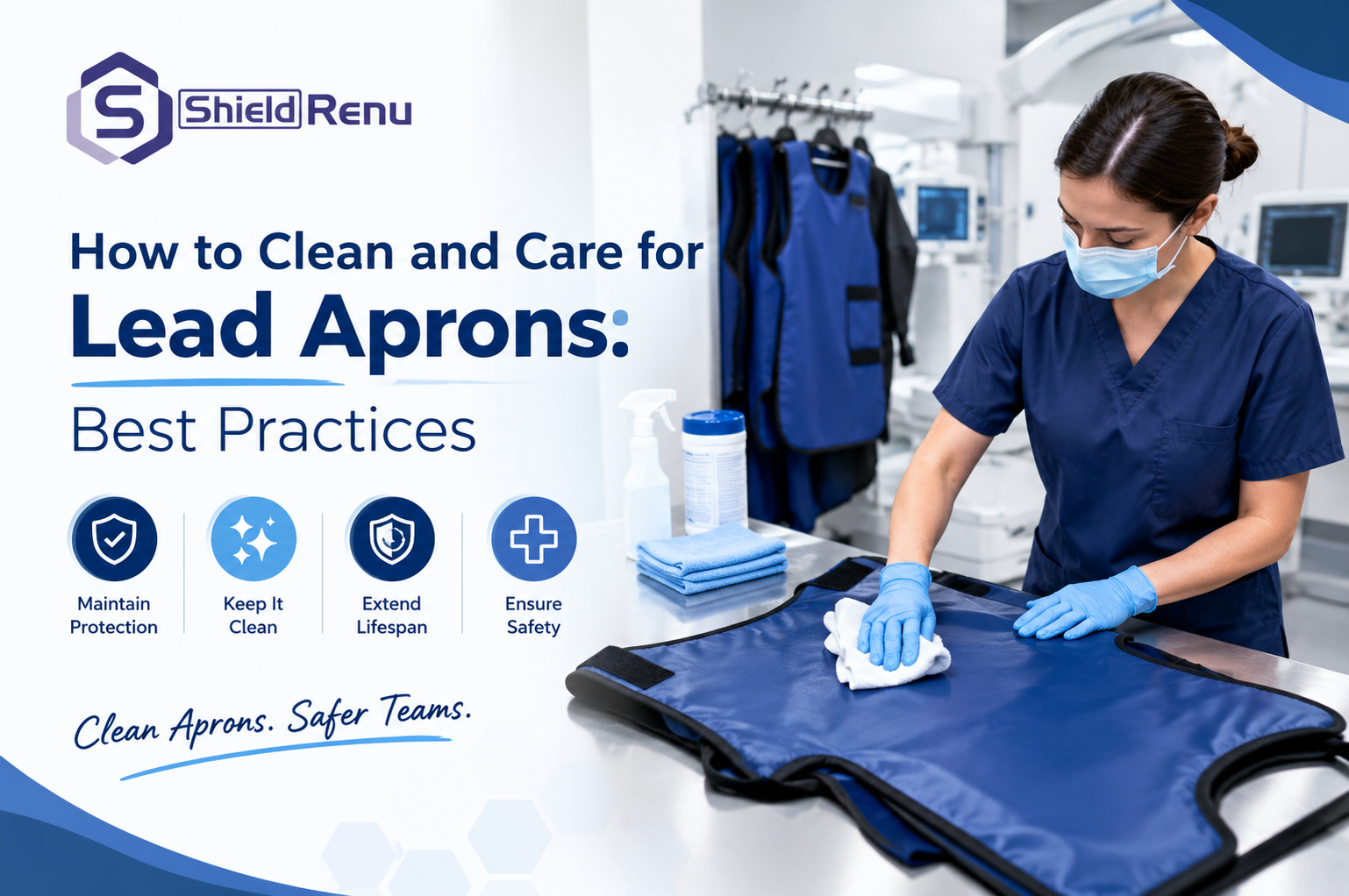
Lead aprons are a daily essential in radiology, cath labs, operating rooms, and dental and veterinary settings. They are worn close to the body, handled by many people, and often moved between rooms throughout a shift. That makes routine care a practical necessity. Knowing how to clean lead aprons the right way helps your facility keep them hygienic, in usable condition, and ready for inspection.
This guide covers general lead apron care and maintenance, including surface cleaning, drying, handling, and storage. One important note before you start: always follow the apron manufacturer’s specific care instructions. Materials, outer coverings, and approved cleaning products vary from one apron to the next.
Why Lead Apron Care Matters
A lead apron is more than a piece of personal protective equipment. It is a piece of equipment that people wear against their skin, share between shifts, and set down on carts, chairs, and floors. Regular cleaning helps remove sweat, skin oils, and everyday surface contamination. You can read more about the risks of neglecting this in our article on the hidden dangers of dirty lead aprons in radiology departments.
Care also protects the apron itself. Harsh chemicals, heat, and rough handling can damage the outer covering or the internal protective material. Small problems such as cracks, folds, or worn seams can then go unnoticed until they show up during an inspection. Good habits at the cleaning stage make later inspections easier and may extend the usable life of each garment.
What You Need Before You Start
Gather your supplies before cleaning so the process stays consistent from apron to apron:
- The manufacturer’s care instructions for each apron model
- A soft, lint-free cloth or sponge
- A mild soap solution or a cleaning/disinfecting product that the manufacturer approves for the apron covering
- Clean water for wiping residue
- Dry towels or clean cloths
- Disposable gloves, if your facility’s policy calls for them
- A hanger or rack for drying
If the manufacturer’s instructions are missing, contact the manufacturer or your facility’s infection prevention team before choosing a cleaning product.
Step-by-Step: How to Clean Lead Aprons
1. Check the Care Label and Facility Policy
Start by reading the care label and your facility’s cleaning policy. Some covering materials tolerate certain disinfectants better than others, so do not assume one product works for every apron in your inventory.
2. Lay the Apron Flat or Hang It Properly
Place the apron on a clean, flat surface or hang it on a suitable hanger. Support the full weight of the garment so the internal material is not pulled or stressed while you work.
3. Wipe the Surface, Do Not Soak It
Use a cloth or sponge dampened with the approved cleaning solution and wipe down the outer surfaces. Pay special attention to areas that touch skin or get handled often, such as the collar, neckline, straps, closures, and the inside lining. Avoid saturating the apron. Moisture that gets into seams or openings is best avoided.
4. Wipe Away Residue
With a second cloth dampened with clean water, wipe off any soap or product residue. Leftover residue can leave surfaces sticky or may affect the covering over time.
5. Allow the Apron to Air Dry Fully
Hang the apron or lay it flat and let it dry completely before it is stored or worn again. Do not use direct heat, and do not place it in a closed space while still damp.
6. Look for Visible Damage While You Clean
Cleaning is a good moment for a quick look. If you notice cracks, tears, holes, loose seams, worn fasteners, or lumps, set the apron aside and flag it for a formal inspection. A cleaning check does not replace a proper inspection, but it helps you catch obvious issues early.
What to Avoid When Cleaning Lead Aprons
Some habits can shorten an apron’s life or damage the protective layer. In general, avoid:
- Submerging aprons in water or cleaning solution
- Machine washing or machine drying
- Excessive heat, including high-temperature drying or direct heat sources
- Harsh or abrasive cleaners that are not approved for the apron covering
- Scrubbing aggressively, which can wear the outer material
- Folding or creasing the apron to fit it into a tight space
When in doubt, use the gentlest approved method and refer back to the manufacturer’s guidance.
Lead Apron Storage and Care Best Practices
How you store an apron matters just as much as how you clean it. Poor storage is one of the most common reasons aprons develop creases and stress points.
- Hang aprons on proper racks or hangers designed for lead garments, with the weight supported evenly across the shoulders.
- Never fold or crumple an apron, and avoid stacking items on top of it.
- Keep aprons away from heat, direct sunlight, and moisture where possible.
- Do not leave aprons on floors, chairs, or equipment between uses.
- Store them in a clean, dry, accessible location so staff are more likely to return them correctly.
A consistent storage routine also makes it easier to track each garment. If your team is still relying on manual lists, see why spreadsheets can cost you in lead apron inventory management, or learn how lead apron tagging and inventory services can help you keep each apron identified and accounted for.
Cleaning vs. Inspection: They Are Not the Same Thing
Cleaning helps maintain hygiene and surface condition. Inspection checks whether the apron is still doing its job. A clean apron can still have cracks or gaps in the protective material that cannot be seen on the surface.
That is why cleaning should work alongside a regular inspection program. To understand the schedule and the risks of falling behind, read how often lead aprons should be inspected and what happens if you skip it. You can also compare approaches in our guide to X-ray vs. visual lead apron inspection. If your facility needs formal documentation, our radiological lead apron inspection services are available.
If an inspection finds damage, the next question is whether to fix it or retire the garment. Our article on lead apron repair vs. replace after inspection walks through that decision.
Aligning Your Care Routine with Industry Guidance
Facilities often build their care and cleaning procedures around professional guidance and accreditation expectations. For a closer look at recommended practices, see our overview of the AORN guidelines for lead apron care.
If you are preparing for a survey, these resources may also help:
- Joint Commission lead apron inspections
- TJC lead apron compliance checklist
- What happens when a facility fails a Joint Commission survey over lead aprons
Keep in mind that your facility’s own policies, your manufacturer’s instructions, and your accrediting body’s requirements should always guide your final procedures.
When to Consider Professional Lead Apron Cleaning
In-house cleaning works well for routine care, but it can be hard to keep up when a facility has dozens or hundreds of aprons across multiple departments. Staff time, inconsistent methods, and gaps in documentation can all become challenges.
In those cases, a professional service can help. Shield Renu offers on-site radiological lead apron cleaning, so your aprons can be cleaned without being shipped away from your facility. This can be a practical option for departments that want a consistent process and less strain on clinical staff.
Quick Lead Apron Care Checklist
- Read the manufacturer’s care instructions
- Use only approved cleaning products
- Wipe surfaces with a dampened cloth, never soak
- Clean the collar, straps, closures, and lining
- Remove residue with a clean damp cloth
- Air dry completely, away from heat
- Hang on a proper rack, never fold
- Report any visible damage for inspection
- Keep each apron tracked and documented
Final Thoughts
Knowing how to clean lead aprons properly is a simple but valuable part of radiation protection programs. A gentle surface-cleaning routine, careful drying, correct storage, and regular inspection all work together to keep aprons in good shape and easier to manage. Follow the manufacturer’s instructions, avoid practices that can damage the garment, and build cleaning into a broader maintenance plan that includes inspection and tracking.
If your team needs support, explore Shield Renu’s on-site lead apron cleaning and inspection services.
Frequently Asked Questions (FAQs)
1. How do you clean a lead apron safely?
Wipe the outer surfaces with a soft cloth dampened with a mild soap solution or a cleaner approved by the manufacturer. Follow with a clean damp cloth to remove residue, then let the apron air dry completely. Avoid soaking, machine washing, and heat.
2. Can lead aprons be machine washed?
No. Machine washing is generally not recommended because it can damage the outer covering and the internal protective material. Surface cleaning by hand is the more suitable approach, but always confirm with the manufacturer’s care instructions.
3. What should I use to clean a lead apron?
Use a mild soap solution or a disinfecting product that the apron manufacturer approves for the covering material. Avoid abrasive or harsh cleaners that are not intended for the garment, and check your facility’s infection control policy as well.
4. How should lead aprons be stored?
Store them hanging on racks or hangers designed for lead garments, in a clean, dry area away from heat and direct sunlight. Do not fold, crease, or stack items on top of them, since this can create stress points in the material.
5. Is cleaning a lead apron the same as inspecting it?
No. Cleaning addresses the surface condition and hygiene of the apron, while inspection checks the garment’s condition and the integrity of its protective material. Both are important, and facilities typically use them together as part of a complete care program.
